
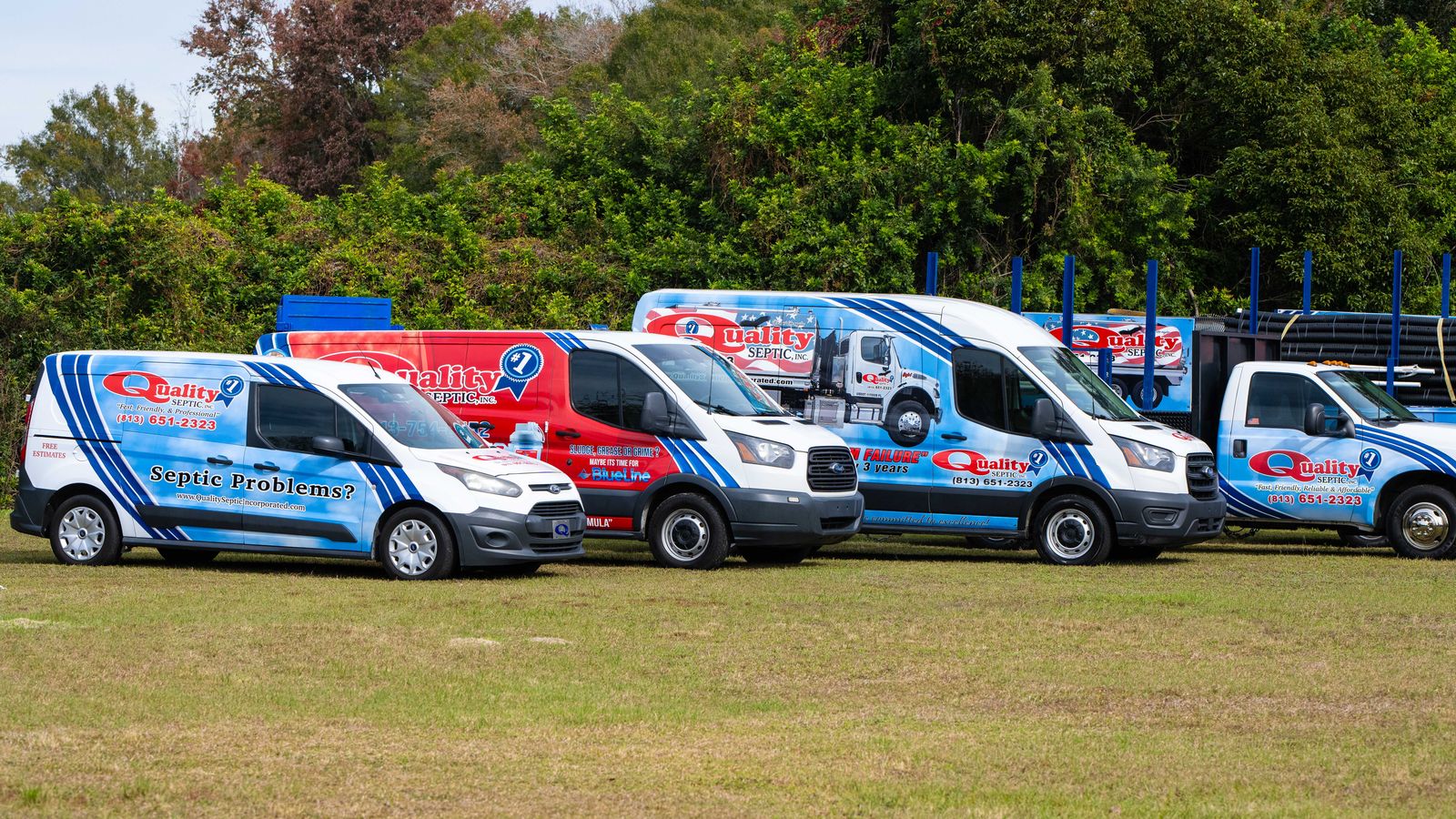
Commercial Septic Pumping: Protect Your Business From Backups, Downtime & Costly Repairs
It’s busy Saturday afternoon at your restaurant. The parking lot is full, the kitchen is bustling, and every table is occupied. Then the toilets stop flushing. A few minutes later, wastewater begins backing up through a floor drain. Suddenly, you aren’t dealing with a maintenance inconvenience. You’re dealing with unhappy customers, employees who can’t safely use the facilities, possible sanitation concerns, and a business that may not be able to continue operating normally until the problem is resolved.
For a homeowner, a septic backup is frustrating. For a business, a septic backup can become an operational emergency. That’s why commercial septic pumping should be treated as part of your property’s regular maintenance, not something you schedule only after there is a problem.
Quality Septic Inc. provides commercial septic pumping and septic services throughout Brandon, Plant City, Lakeland, Mulberry, Valrico, Fishhawk, Bloomingdale, Riverview, Carrollwood, Lutz, Tampa and Temple Terrace, helping Central Florida businesses stay ahead of septic problems before they interrupt operations.
Common questions
How Does Commercial Septic Pumping Work?
Commercial septic pumping removes accumulated solids, sludge, grease and other waste from a business’s septic tank before those materials can interfere with the system or reach the drain field. A commercial septic system works on the same basic principle as a residential system, but the demands can be dramatically different.
Think about the wastewater generated by a:
- Restaurant
- Convenience store
- Office
- Daycare
- Church
- Retail business
- Warehouse
- Automotive business
- Commercial facility
More employees, customers, toilets, sinks, and daily activity can mean considerably more wastewater entering the system. That is why business owners often need a septic maintenance schedule based on actual usage rather than a standard residential pumping interval.
Why Commercial Septic Systems Require More Attention
While larger than their residential counterparts, commercial septic tanks are not unlimited holding tanks. Wastewater enters the tank continuously. Solids settle toward the bottom while oils and lighter materials collect toward the top. The liquid portion eventually leaves the tank and moves toward the drain field. However, the solids remain. As solids accumulate, the usable space inside the tank becomes smaller.
Eventually, an overloaded tank can allow material that should remain inside the tank, to move farther into the system. That’s when a septic tank problem can become a drain field problem. For a commercial property, the consequences can be much larger than the cost of simply pumping the tank.
From Your Business to the Drain Field
A healthy commercial septic system follows a basic path:
BUSINESS WASTEWATER → SEPTIC TANK → DRAIN FIELD → SOIL
At your business, wastewater enters the system from restrooms, sinks, kitchens and other approved fixtures. Inside the septic tank, solids and liquids separate. The liquid wastewater then travels toward the drain field, where it is distributed into the surrounding soil for further treatment.
Commercial septic pumping interrupts one potentially destructive part of this cycle:
SOLIDS ENTER THE TANK → SOLIDS ACCUMULATE → TANK IS PUMPED → SOLIDS ARE REMOVED
However, without that final step, solids continue accumulating causing a nightmare for your business operations.
Real Problems Encountered By Commercial Septic Pumping Companies
#1: Friday Night Restaurant Backup
Restaurants can be especially demanding on septic systems because they generate wastewater throughout the day. Imagine a restaurant near Brandon or Lakeland that is busiest Thursday through Sunday.
During peak periods, the system may be receiving wastewater from:
- Customer restrooms
- Employee restrooms
- Handwashing sinks
- Food preparation
- Cleaning
- Dishwashing
If maintenance hasn’t kept pace with the property’s usage, the busiest night of the week may also be when the problem finally becomes noticeable. That is exactly when a business can least afford a septic emergency.
The lesson here is, don’t base your commercial septic maintenance solely on the calendar. Usage matters. A property with heavy daily wastewater generation may require a very different pumping schedule than a small office with the same size tank.
#2: Afternoon Thunderstorms and Saturated Ground
Anyone operating a business in Florida knows how quickly a sunny afternoon can turn into a major thunderstorm. You also know, that those thunderstorms can happen day after day. After repeated periods of heavy rainfall, the soil surrounding a drain field can become saturated. That matters because the drain field depends on the surrounding soil to absorb and treat wastewater. If the ground is already holding substantial rainwater, the system can have difficulty dispersing it’s intended wastewater.
Now combine that with a commercial property operating at full capacity.
You may begin noticing:
- Slow drains
- Gurgling fixtures
- Unusual odors
- Wet areas outside
- Wastewater backups
Commercial Septic Tank Pumping cannot fix saturated soil, but maintaining the tank properly can help prevent an overloaded tank with accumulated solids from adding another problem to an already stressed system.
This is particularly important throughout Brandon, Riverview, Valrico, Fishhawk, Bloomingdale and the greater Tampa area, where intense summer rainfall is simply part of doing business in Florida.
#3: The Business That Grew but Didn’t Adjust Their Septic Pumping Schedule
Unfortunately, an easily overlooked problem could be that a business starts with 10 employees, then three years later it has 25 employees, and substantially more customers. However, no one thought to change the septic maintenance schedule. Although the property now generates significantly more wastewater than when the original commercial septic pumping interval was established.
The same thing can happen when a building changes uses. A relatively low-traffic office becoming a busy retail, food-service or customer-facing location can completely change how the property’s wastewater system is used.
Question to think about: Has your business changed since your septic maintenance schedule was created? If the answer is yes, your maintenance needs may have changed too.
What Happens When Commercial Septic Pumping Is Delayed?
The progression often happens underground long before anyone notices.
Stages 1 through 4 offer an opportunity to address the problem before your business suffers a shutdown because of the problems associated with stage 5.
The True Cost of a Commercial Septic Problem
Business owners naturally compare the price of preventative maintenance against other operating expenses. However, the better comparison isn’t cost of pumping vs. doing nothing. It’s Cost of planned maintenance vs. cost of an unexpected failure.
A serious septic problem can create expenses related to:
- Emergency service
- Plumbing repairs
- Drain field repairs
- Wastewater cleanup
- Damaged flooring or building materials
- Employee downtime
- Lost customers
- Lost appointments
- Interrupted production
- Temporary closure
The exact financial impact varies by business. Consider a restaurant that loses an entire Friday evening of sales or a daycare that cannot safely operate its restroom facilities. The cost of the septic repair may only be one portion of the actual financial loss.
How Often Should a Commercial Septic Tank Be Pumped?
There isn’t one responsible answer for every commercial property. A pumping schedule should consider factors such as tank capacity, number of employees, customer traffic, type of business, daily wastewater volume, operating hours, previous maintenance history, condition of the system, and seasonal fluctuations. A small professional office and a busy restaurant should not automatically follow the same schedule simply because both have the same size septic tanks.
At Quality Septic we can help you evaluate the property’s usage and service history to establish a maintenance approach appropriate for the business.
7 Warning Signs Your Commercial Septic System Needs Attention
Don’t assume every septic problem begins with sewage coming out of a drain. Earlier warning signs can provide valuable time to act.
- Multiple slow drains – One slow sink may be a localized plumbing issue. Multiple slow fixtures deserve closer attention.
- Gurgling toilets – Air moving through the plumbing can signal wastewater isn’t flowing normally.
- Recurring backups – A problem that keeps returning should be investigated rather than repeatedly cleared.
- Sewage odors – Persistent wastewater odors inside or outside the property shouldn’t be considered normal.
- Standing water near the septic area – Especially concerning when there hasn’t been enough rainfall to explain it.
- Unusually lush patches of grass – Abnormal growth over part of the septic area can sometimes indicate excess moisture or nutrients.
- Unknown pumping history – If nobody knows when the tank was last serviced, that’s valuable information by itself.
Commercial Septic Checklist for Florida Businesses
☐ Do we know when our septic tank was last pumped?
☐ Do we know the tank’s approximate size?
☐ Do we know where the tank and drain field are located?
☐ Has our employee count or customer traffic increased?
☐ Has the property’s use changed since the septic system was installed?
☐ Have we experienced recurring slow drains or backups?
☐ Have employees reported sewage odors?
☐ Does water remain over the drain field area after surrounding areas have dried?
☐ Are delivery or service vehicles driving over the drain field?
☐ Do we have a septic company to call if a problem occurs?
If several answers are “I don’t know,” that’s a good reason to take a closer look at your septic maintenance plan.
How Quality Septic Inc. Can Help Your Business
Commercial septic service should be more than arriving after something goes wrong. Quality Septic Inc. can helps Florida businesses with commercial septic pumping, routine septic maintenance, system evaluations and emergency septic needs. Our goal is to help you understand what’s happening with your system so you can make informed decisions about your property. Whether you’re managing a small office, busy commercial property or a facility with significant daily wastewater demands, we can help determine the appropriate next step.
And when an urgent septic problem does happen, Quality Septic is available 7 days a week.
Local Commercial Septic Service Across Central Florida
Quality Septic Inc. serves businesses throughout:
Brandon • Plant City • Lakeland • Mulberry • Valrico • Fishhawk • Bloomingdale • Riverview • Carrollwood • Lutz • Tampa • Temple Terrace
Our experience with Central Florida properties means we understand that septic performance isn’t just about the tank. Rainfall, groundwater, soil conditions, property usage and maintenance history all matter.
Frequently Asked Questions About Commercial Septic Pumping
How is commercial septic pumping different from residential pumping?
The basic pumping process is similar, but commercial systems may experience much greater wastewater volumes and different types of usage. Maintenance frequency should therefore be based on the individual property rather than automatically following a residential schedule.
How do I know when my commercial septic tank needs pumping?
Maintenance records are your best starting point. Tank size, usage and accumulated solids should all be considered. If your history is unknown—or you’re already experiencing slow drains, odors or backups—schedule an evaluation rather than waiting for the situation to worsen.
Can Quality Septic pump restaurants and other businesses?
Yes. Quality Septic provides commercial septic pumping for businesses and commercial properties throughout our Central Florida service area.
Does heavy Florida rain cause septic backups?
Heavy rain can saturate the soil surrounding a drain field and make it harder for wastewater to disperse. Rain isn’t responsible for every backup, however, so recurring problems should be properly evaluated.
Will pumping fix a failing drain field?
Not necessarily. Pumping removes waste from the septic tank and may provide temporary relief when a tank is overfull, but it cannot repair a damaged or failing drain field. Determining the underlying cause is important.
Should a commercial property wait until the tank is full before pumping?
No. The goal of preventative pumping is to remove accumulated solids before they create problems elsewhere in the system.
Do you provide service on weekends?
Yes. Quality Septic Inc. is open 7 days a week, which is especially valuable for businesses that operate outside traditional Monday-through-Friday hours.
Protect the Part of Your Business Your Customers Never See
Your customers probably won’t compliment you on a perfectly maintained septic system and that’s exactly the point. When commercial septic maintenance is handled properly, employees can work, customers can use the facilities, drains work normally, and business continues without anyone thinking about what’s happening underground.
Don’t make a sewage backup your reminder that the tank needed attention. Quality Septic Inc. can help you build a smarter approach to commercial septic maintenance, and still be there for you when an unexpected problem requires attention.
Septic Care You Can Count On. Where Quality Meets Trust.
What we do about this
Septic Tank Pumping
Same-day pump-outs, both compartments, an honest report.
Septic Tank Pumping →Drain Field Repair
Soggy patches and standing water. We diagnose before we dig.
Drain Field Repair →Septic System Repair
Pumps, alarms, baffles, lids and lines.
Septic System Repair →Not sure where your system stands?
We answer seven days a week and most questions we can settle on the phone. If it needs a look, the estimate is free.