
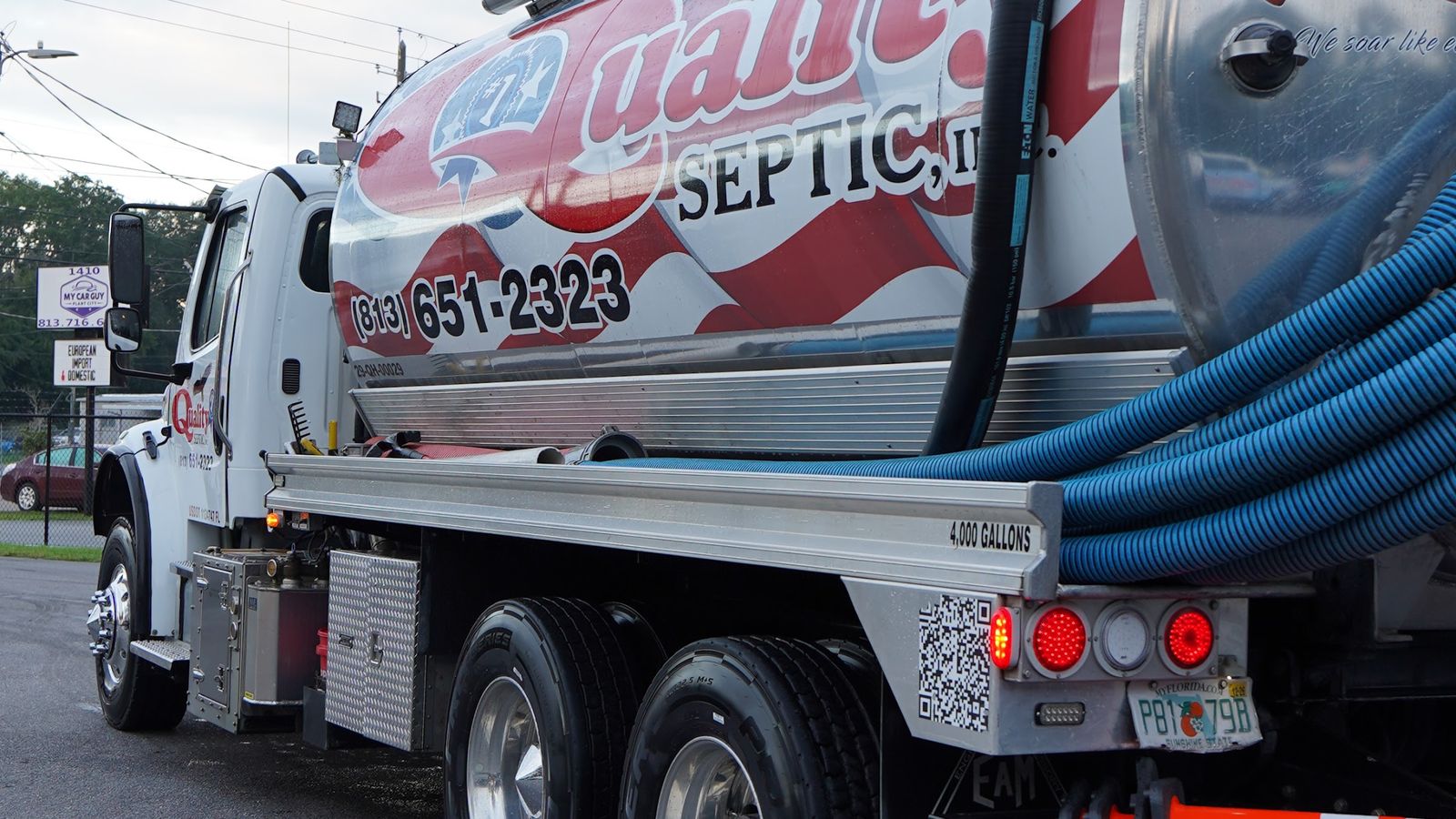
Heavy rainfall, tropical storms, and sudden flooding can put your entire residential or commercial septic system at immediate risk. At Quality Septic, Inc., we see firsthand how storm surges and heavy downpours saturate local soil, leading to stalled household drainage, dangerous sewage backups, and catastrophic system failures. If you are experiencing heavy seasonal rains in Tampa, Brandon, Plant City, Lutz, Land O’ Lakes, or Lakeland, taking proactive steps to protect your drain field is essential to avoiding thousands of dollars in property damage.
Why Flooding and Oversaturated Soil Threaten Your Septic System
Your septic drain field, also known as a leach field, plays the most critical role in the wastewater treatment process. It relies entirely on unsaturated, porous soil to naturally filter, treat, and disperse the liquid effluent that flows out of your septic tank.
When torrential Florida rains flood your yard, the ground becomes completely waterlogged, destroying this delicate balance in three distinct phases:
Signs Your Drain Field is Saturated or Flooding
Catching the early warning signs of a waterlogged or failing drain field allows you to act before wastewater ruins your indoor flooring or landscaping. Watch for these critical red flags during and after major storm events:
Actionable Steps to Protect Your Drain Field From Heavy Rains
Implementing smart stormwater management and reducing strain on your infrastructure before the wet seasons hit is your best defense against an expensive breakdown.
- 1
Divert Stormwater Runoff Away From the System Area
Take a look at your property’s grading. Your yard should always slope away from the septic tank and drain field. Additionally, ensure your roof gutters are completely clear of debris and extend your downspouts so they discharge rain runoff far away from your septic footprint.
- 2
Practice Extreme Water Conservation During Heavy Storms
When the local water table rises from a storm, minimize the internal load on your system. Postpone running the dishwasher or washing machine, take brief showers, and avoid flushing toilets unnecessarily until surface floodwaters have completely receded from your yard.
- 3
Avoid Soil Compaction At All Costs
Never drive vehicles, park trucks, or operate heavy lawn machinery over your septic tank or drain field. Wet, flooded soil compacts far easier than dry earth. Compacting the ground crushes lateral pipes, shifts underlying gravel beds, and permanently destroys the soil’s natural porosity.
- 4
Schedule Pre-Season Septic Tank Pumping
Preventative maintenance is your primary line of defense. Pumping your tank clears out accumulated solid sludge layers, maximizes your tank’s temporary storage capacity, and significantly reduces the immediate hydraulic stress pushed out to your drain field lines when rain hits.
Professional Septic Inspections and Fast Flood Support
If your property anywhere across Hillsborough County or Polk County has experienced recent storm flooding, do not wait for a complete backup to seek assistance. Quality Septic, Inc. provides expert diagnostic evaluations, advanced drain field restoration, and preventative maintenance tailored strictly to Florida’s unique sand-and-clay soil profiles and high water tables.
Trusted since 1994, our skilled technicians are fully equipped to keep your property safe, sanitary, and fully prepared for the next heavy downpour.
Contact Quality Septic, Inc. today to schedule your comprehensive system inspection and secure your home against severe storm damage.
What we do about this
Septic Tank Pumping
Same-day pump-outs, both compartments, an honest report.
Septic Tank Pumping →Drain Field Repair
Soggy patches and standing water. We diagnose before we dig.
Drain Field Repair →Septic System Repair
Pumps, alarms, baffles, lids and lines.
Septic System Repair →Not sure where your system stands?
We answer seven days a week and most questions we can settle on the phone. If it needs a look, the estimate is free.