Trusted Since 1994
Call today for your Free Estimate or for any question 813-754-9891
What is a Septic Drain Field? (Function, Signs of Failure & Maintenance)
If you rely on a residential septic system to manage your household wastewater, you have likely heard the term drain field (or leach field) tossed around. However, many homeowners do not fully understand its purpose, how it functions, or just how critical it is to the health of their entire plumbing system.
At Quality Septic Inc., we believe that the more you know about your system, the better equipped you are to prevent costly breakdowns. While complex repairs require professional intervention, understanding the basics helps you catch problems before they turn into emergencies.
Let’s break down exactly how a drain field works, what causes it to fail, and how to protect your property.
What is a Drain Field and How Does It Work?
A drain field is the large, subsurface area of your yard responsible for treating and disposing of organic wastewater. It acts as the final natural filtration step of a standard septic system.
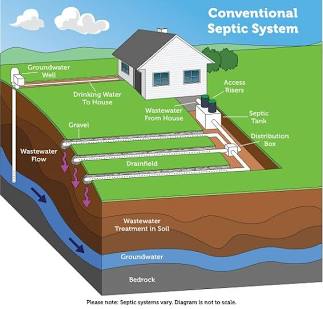
As shown in the diagram above, the purification process follows a specific sequence:
Separation in the Tank: Heavy solids settle at the bottom of your septic tank as sludge, while lighter oils and grease float to the top as scum.
Effluent Flow: The relatively clear liquid layer in the middle—known as effluent—exits through the tank outlet and passes through a distribution box.
Soil Absorption & Natural Filtration: This liquid flows into the drain field’s network of perforated pipes buried in gravel-lined trenches. The effluent slowly trickles through the gravel and sinks into the unsaturated soil layers underneath.
Biological Treatment: Microorganisms naturally present in the soil break down remaining organic matter, filtering out harmful bacteria, viruses, and nutrients before the purified water finally returns to the local groundwater table.
Why Your Drain Field is Crucial to Your Entire Property
Your drain field isn’t just an exit route for water; it is a highly active biological treatment site. Without a properly functioning leach field, your entire waste management system fails. A healthy field provides three primary benefits:
Environmental Safety: It thoroughly purifies wastewater, keeping contaminants out of your backyard soil and local drinking water aquifers.
Property Protection: A clear, absorbing field ensures wastewater moves away from your home instead of backing up into your toilets, showers, and sinks.
System Longevity: When working perfectly, it distributes the liquid load evenly, preventing your septic tank from overfilling and extending the life of your entire setup.
Common Signs of Drain Field Failure
When a drain field becomes compromised, it can no longer absorb liquid at the rate your household produces it. If you notice any of the following warning signs on your property, you should act quickly:
Warning Signals:
Soggy Soil or Pooling Water: Wet, muddy patches or standing water over the absorption trenches, even when it hasn’t rained.
Spongy, Vibrant Grass: Strips of exceptionally lush, bright green grass growing directly over the pipe lines compared to the rest of the lawn.
Foul Odors: Persistent sewage smells wafting through the yard near the tank or absorption field.
Sluggish Household Drainage: Slow-draining sinks, gurgling pipes, or frequent backups in your lowest-level plumbing fixtures.
What Causes a Leach Field to Fail?
Most modern drain fields are designed to last for decades, but certain habits can cause premature failure:
Soil Compaction: Driving vehicles, parking heavy equipment, or building structures (like sheds or decks) over the area compresses the soil, crushing the pipes and destroying its ability to absorb water.
Root Intrusion: Planting trees or large shrubs too close to the system allows aggressive roots to seek out the moisture, breaking into the perforated pipes and blocking water flow.
System Oversaturation: Sending too much water down the drain at once—such as running multiple heavy loads of laundry on the same day—floods the trenches and suffocates the oxygen-reliant bacteria needed to clean the water.
Solid Carryover: Failing to pump your septic tank regularly allows accumulated sludge to spill over into the drain field, clogging the soil pores permanently.
Best Practices for Drain Field Maintenance
Preventative care is significantly cheaper than replacing a failed absorption field. Protect your investment by following these simple household rules:
| Do’s | Don’ts |
| Conserve Water: Fix leaking faucets immediately and spread out large water-using tasks across the week. | Don’t Drive on It: Keep cars, trucks, heavy lawnmowers, and livestock completely off the field. |
| Plant Smart: Only grow shallow-rooted grass or native groundcover over the trenches. | Don’t Flush Trash: Never flush wet wipes, grease, paper towels, chemicals, or feminine products. |
| Divert Runoff: Ensure gutters, downspouts, and patio drainage direct rainwater away from the septic zone. | Don’t Ignore Pumping: Never let your tank go unpumped; stick to a strict 3-to-5-year maintenance cycle. |
Expert Septic Inspections and Repairs in Central Florida
If you suspect your system is struggling or if it has been years since your last professional look, don’t wait for a total backup. Finding a problem early can mean the difference between a simple structural repair and a complete, costly system replacement.
Quality Septic Inc. has been providing trusted, honest septic solutions since 1994. Our experienced technicians specialize in complete system diagnostics, routine pumping, and advanced drain field restoration. We proudly serve residential and commercial properties throughout Central Florida, ensuring fast, reliable service when you need it most.
Our Florida Service Areas:
We provide expert septic care across Plant City, Tampa, Brandon, Lutz, Land O’ Lakes, and Lakeland.
To schedule an inspection, get an honest estimate, or learn more about maintaining your system’s health, contact our team today.
Website: qualitysepticincorporated.com
Phone: (813) 651-2323
Follow our Facebook today :