
Same Day Septic Services | Call Today 813-754-9891
The Lifespan of a Septic System: How Long Will It Last?
A septic system is the unsung hero of your home. It works quietly underground to manage your household wastewater. But like any major home asset, it doesn’t last forever.
Whether you are buying a home in Plant City, managing a property in Lakeland, or maintaining your long-time family home in Brandon, understanding your septic system’s life expectancy—and how to protect it—can save you thousands of dollars in emergency replacements.
How Long Does a Septic System Actually Last?
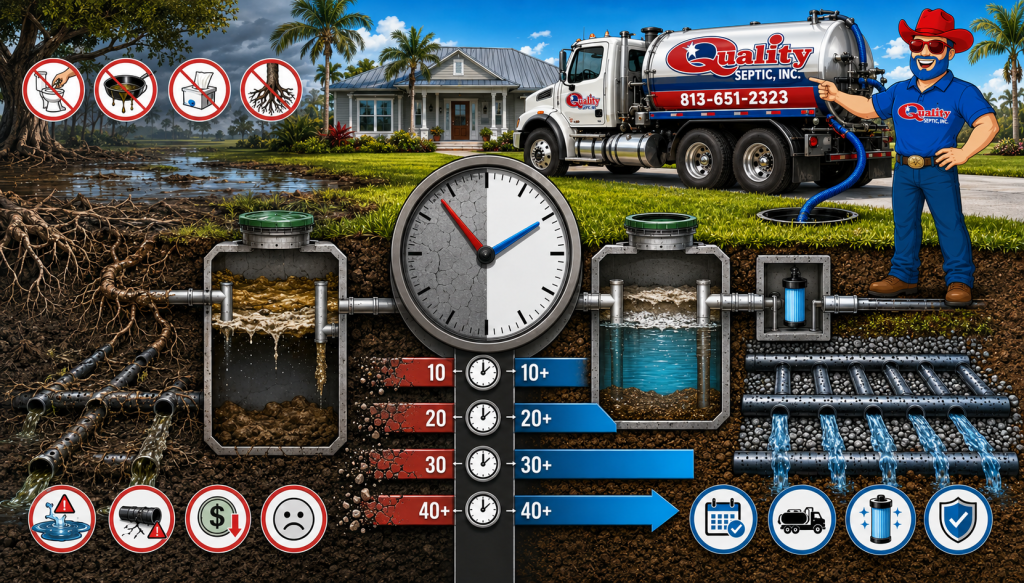
On average, a standard residential septic system lasts 20 to 40 years.
However, that is a wide window. Where your system falls on that spectrum depends on a few critical variables:
Tank Material: Concrete and advanced plastic tanks are highly durable and resist breakdown for decades. Older steel tanks are highly prone to rusting out and failing much sooner.
Local Soil Conditions: Here in Central Florida, soil types vary wildly. Sandy, well-drained soils are generally excellent for filtration, while heavy clay or areas with a high water table can put extra stress on a drain field.
Water Volume: Households that constantly push high volumes of water through their pipes force the system to work overtime, shortening its natural lifespan.
Routine Maintenance: This is the ultimate dealbreaker. A system that is regularly pumped and inspected can easily cruise past the 40-year mark. A neglected one can fail in less than 10.
The Quality of Installation: A system is only as good as its setup. Correct grading, proper pipe placement, and expert installation ensure it functions smoothly from day one.
4 Warning Signs Your Septic System Is Nearing Retirement
Septic systems rarely fail overnight without warning. Keep an eye out for these classic red flags around your property:
The “Lush Grass” Trap: If the grass directly over your drain field is suddenly vibrant, thick, and bright green compared to the rest of your yard, it’s not a blessing—it’s a warning. This happens when failing underground pipes leak nutrient-rich wastewater straight to the surface.
Slow Drains Everywhere: If a single sink is backed up, it’s a plumbing clog. If every drain, shower, and toilet in the house is sluggish, your septic tank or drain field is full.
Pooling Water or Soggy Soil: Puddles or muddy patches forming in your yard near the drain field (even when it hasn’t rained) mean the soil can no longer absorb wastewater.
Foul Odors: Persistent sewer smells wafting through your yard or creeping up through your indoor drains mean gases are escaping the system.
If you spot any of these signs, it is critical to call in a professional immediately before a minor issue turns into a total system collapse.
5 Proactive Ways to Extend the Life of Your Septic System
You can’t stop time, but you can absolutely prevent premature failure. Use these five practical habits to protect your investment:
1. Stick to a Routine Pumping Schedule
Think of pumping like changing the oil in your car. You should have your septic tank professionally pumped and inspected every 3 to 5 years. This removes the accumulated solid waste before it can overflow, escape the tank, and permanently clog your drain field pipes.
2. Protect Your Drain Field
The area above your drain field should remain completely undisturbed.
Never park vehicles, drive heavy equipment, or build structures (like sheds or decks) over it, as this compacts the soil and crushes buried pipes.
Keep trees and large shrubs planted far away; aggressive root systems can grow into your pipes and completely block the flow.
Divert rainwater gutters and driveway runoff away from the zone to prevent oversaturating the soil.
3. Watch Your Drains & Toilets
Your system relies on live, natural bacteria to break down organic waste. Harsh chemicals like bleach, drain cleaners, solvents, and paint can kill these beneficial bacteria instantly. Furthermore, never flush:
Baby wipes or “flushable” wipes (they do not break down!)
Feminine hygiene products or paper towels
Cooking grease, fats, and oils
4. Smart Water Conservation
An overloaded system cannot process waste efficiently. Try to spread out water-heavy tasks throughout the week rather than running the washing machine, dishwasher, and multiple showers all on a single Saturday morning. Upgrading to low-flow fixtures and fixing leaky faucets also makes a massive difference over time.
5. Keep the Whole House Informed
A septic system is only as safe as the people using it. Make sure family members and guests know the basic rules of what can and cannot go down the drains.
Be Proactive: Plan for the Future
Even with pristine care, physical components eventually reach the end of their functional life. If your system is creeping past the 25-year mark, it’s smart to start budgeting for a future replacement. Staying ahead of the timeline lets you choose the right system on your own terms, avoiding the stress and chaos of an emergency backup.
Expert Septic Care Across Central Florida
Whether you need a routine preventative pump, a detailed system inspection, or a complete drain field evaluation, the team at Quality Septic, Inc. has been the trusted local choice since 1994.
We proudly serve homeowners and businesses throughout Plant City, Tampa, Brandon, Lutz, Land O’ Lakes, Lakeland, Valrico, Seffner, Riverview, Thonotosassa, and surrounding Central Florida communities.
Call Us Today: 813-754-9891
Visit Our Website: www.qualitysepticincorporated.com
Visit our Facebook today : https://www.facebook.com/qualitysepticincorporated